

Common Challenges
Breastfeeding Challenges
Common Challenges
Breastfeeding should not be painful. Your breast and nipples may say sore/tender the first few days after giving birth to your baby. This pain should go away once your baby learns to latch correctly and you have found the right breastfeeding position that feels comfortable to you. Here are some reasons your breast might be sore.
Breast Symptoms
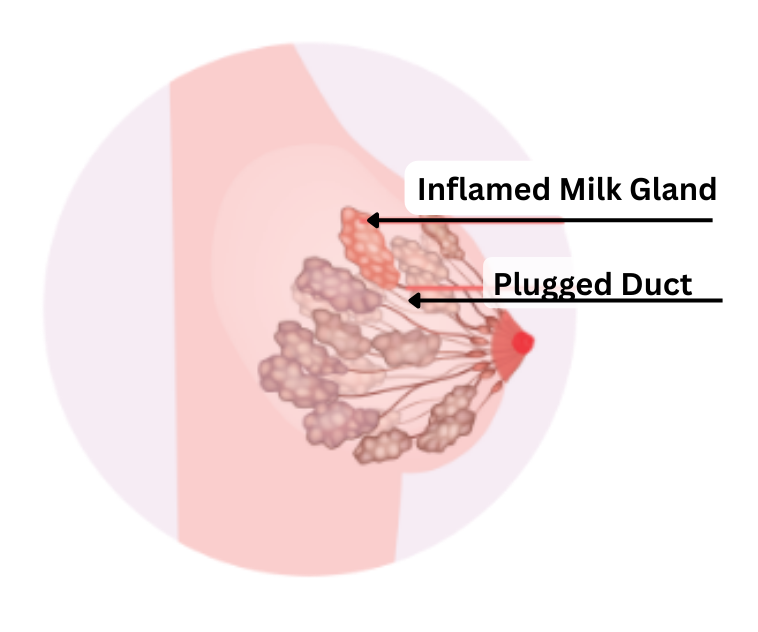
Plugged Duct
A plugged duct is caused by milk not being able to fully drain from your breast.
Signs:
- Small swollen lump in your breast that can be painful.
- No fever.
What You Can Do:
- Avoid tight-fitting clothing or bras (avoid bras with underwire).
- Use a warm compress or take a warm shower.
- Pump or hand express after feeding.
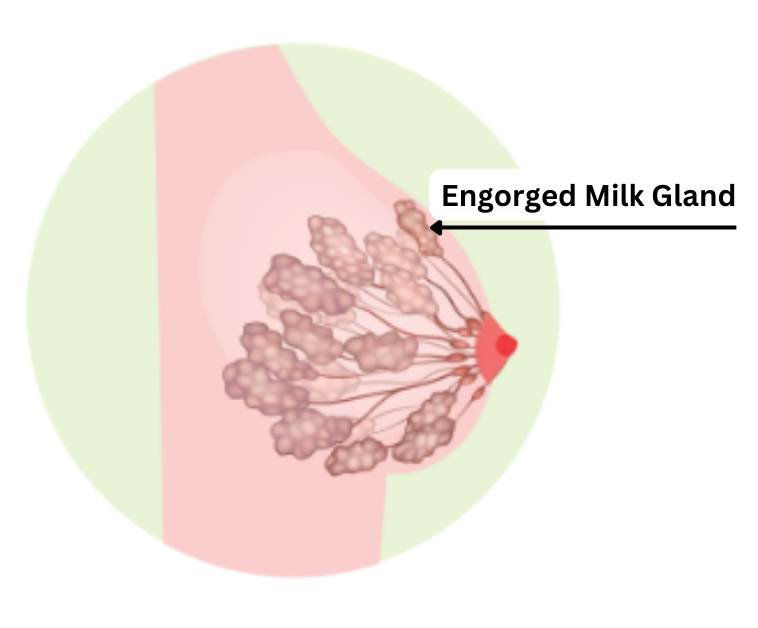
Engorged Milk Gland
Engorgement can be caused by missed or delayed feeding or pumping sessions. Your breasts become hard and painful.
Signs:
- Swelling, throbbing, and tenderness.
- No fever.
What You Can Do:
- Do not skip feedings or stop breastfeeding. This will only make the engorgement worse.
- Hard breasts can make it difficult for baby to latch, so make sure your baby has a good latch.
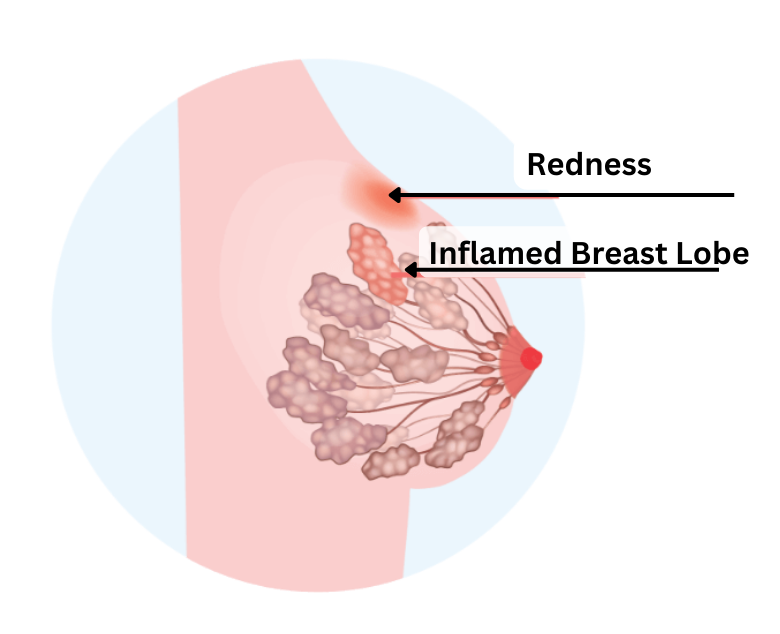
Breast Infection (Mastitis)
Breast infection, called mastitis, is an infection of the tissue of the breast.
Signs:
- Body aches, fever, and chills.
- Expressed milk may look clumpy or stringy — the milk is safe to feed your baby.
What You Can Do:
- You may need to be treated in an emergency room if you have any of the following signs:
- Red streaks moving toward your arms or chest.
- Dizziness or fainting.
- Pus draining from your breasts.
- Continue to breastfeed and express milk frequently. It is important to keep removing milk from both breasts.
Purple Crying
When a baby cries a lot, parents might think it’s a breastfeeding problem. But at two weeks, crying is normal. It can be caused by growing, digestion, too much noise, or a stage called “purple crying.” Purple crying is when babies cry a lot for hours. It is normal from 2 weeks to 3 or 4 months. Knowing this helps parents see that the crying will stop and nothing is wrong. It can help parents stay calm, be patient, and find ways to soothe the baby instead of changing feeding routines.